

Samhan Chronicles / the road ahead
Word from the world.
A little news. A useful answer. Then, onward.
Realm availability Check the client login screen for the realm’s current state.
Word from the realm
Global Wisdom
Public notices, Carnage announcements, and words from the Game Masters.
The chronicle continues
Patch Notes
The latest changes to the world we share.
Gazette / Discovery Registry
The world is larger than its catalogue.
A first find deserves a place in the record. Recent discoveries, credited to the Defenders who made them.

First-discovery credit stays with the original discovery. Later Best-Known records are separate honours, not replacements.
Leaderboards · awaiting server feed
A board without challengers is furniture.
Standings will appear when the realm has something worth ranking.
Common Nonsense / A little local knowledge
A Word to the Wayfarer
Finding a word for the road…
The Wanderer’s reference
Find your way.
You do not need to know the whole world before taking your place in it. Sometimes one word, one helpful person, or one small distinction is enough. Follow the connections: creature to carcass, crop to garment, lesson to restored hall. Look up what you need. Leave the rest for the next road.
Curiosity is sufficient equipment to begin.
Start here
Where do I begin?
Start with the words you are meeting now. Wanderer names your character before Path choice; a Path is a discipline, and a trade is work learned alongside it. You can understand the next step without memorizing the whole world.
Useful details
| Word | The first thing to understand |
|---|---|
| Wanderer | Your character before Path choice, at levels 1-4. |
| Defender | Inherited capacity brought into deliberate use through training. |
| Path | Warrior, Rogue, Mystic, or Sage: four equally valid disciplines. |
| Trade | Useful work learned alongside a Path. |
| Vita / Mana | Recoverable resources; spending them does not erase training. |
| Solids / Liquids | Preparation categories associated with Vita and Mana buffs. |
| Carcass | The useful remains of a defeated creature. |
| Butcher | The work skill for extracting a carcass's raw consumable buff. |
| Quintessence | The common source expressed through five parent elements. |
| Golden Route | The opening journey and the record that helps make it understandable. |
| Legend Mark | A lasting record of a choice, deed, or completed milestone. |
| Silverthread | The established return after incapacity. |
| Patron | A supporter whose benefits centre on homesteads, hosting, and expeditions. |
| Board / Eternal Library | Short Spoonfuls and a durable Library organized into sections and shelves. |
Wanderer
The player-facing precursor state at levels 1-4, before Path choice; it replaces Peasant. This book also welcomes wanderers in the ordinary sense. Experienced Defenders may still get lost.
Defender
A person bringing inherited capacity into deliberate use through Path training. Broader than Warrior, Rogue, Mystic, or Sage individually.
Path
A Defender's practised discipline: Warrior, Rogue, Mystic, or Sage. It shapes action and equipment while leaving room for a separate trade identity. Player switching rules remain unverified.
Trade
Learned work alongside a Path; also the exchange of goods. Harvesting, Forestry, and Mining are the three gathering trades, feeding other kinds of making.
What does each Path bring?
Warrior, Rogue, Mystic, and Sage have equal standing and different work. Strength, timing, precise casting, and timely restoration each change what a group can accomplish. A Path gives your training direction; it leaves room for a trade of your own.
Useful details
| Path | Steward | Contribution |
|---|---|---|
| Warrior | Wallace | Deliberate strength; firm footing, turning room, and pressure-bearing structure. |
| Rogue | RyLee | Perception, timing, movement, useful openings, and escape. |
| Mystic | Moira | Precise casting and careful use of Mana across an undertaking. |
| Sage | Solomon | Sustained attention, timely restoration, and shared endurance. |
Warrior
The Path of deliberate strength: meeting resistance, making firm footing, and creating turning room. Wallace is its steward.
Rogue
The Path of perception, timing, and movement: finding seams, cover, openings, and escape. RyLee is its steward.
Mystic
The Path of deliberate, precise casting and careful Mana use across an undertaking. Moira is its steward. Elemancy is a separate craft.
Sage
The Path of sustained attention, timely restoration, and shared endurance. Solomon is its steward; the discipline has equal standing with the other three.
Prepare and continue
Must I start the quest again?
Check the exact name, then what is carried, equipped, and ready. Look for the furthest proof of progress: a later item, learned ability, Legend Mark, or access already earned. Continue with the first unfinished step. If the records disagree, bring that contradiction to Player Help.
Young Ginseng and Fermented Ginseng are different items. A similar name is not the same proof.
Quest Log
The record of active objectives and requirements. Read it with inventory, learned abilities, Legend Marks, and earned access to find your furthest confirmed progress.
Legend Mark
A persistent record of a choice, deed, or milestone. A mark can establish later quest progress after an earlier object has been consumed or replaced.
Player Help
The ordinary route for quest, item, Path, trade, map, account, download, and patch questions. Give the last successful step and the present obstacle. In-game defects use Client Help; confidential concerns use My Account.
Why will this tool not work?
Possession is only the first check. The Paring Knife must be equipped in the weapon slot before it can peel potatoes. A hotkey does not supply missing equipment or Mana. Check what the action needs, not just what is in your bag.
A tool in your bag is luggage.
Equipped
Placed in the slot that enables an item's function. A tool in your bag is luggage. A worn garment may need removing before it can be handed over.
Hotkey
A shortcut assigned to an item or spell. Assignment does not equip a tool, supply Mana, or satisfy another prerequisite by itself.
Paring Knife
The tutorial potato-peeling tool. Equip it in the weapon slot before use; possession alone peels nothing.
What are Vita and Mana?
Vita and Mana are spendable, recoverable resources. Running low can interrupt what you are doing; it does not erase the training that made the action possible. Recovery restores your ability to continue, while the discipline remains yours.
Vita
The spendable, recoverable resource of the living body. Nourishment restores it through living matter's quintessence; depletion does not erase learned discipline.
Mana
The spendable, recoverable resource through which disciplined intention becomes action. An empty reserve can stop an ability without erasing the training behind it.
Training
Practice that makes inherited capacity deliberate and repeatable. Spending Vita or Mana can interrupt an action without erasing the learned discipline.
Silverthread
The return after incapacity, reached through F1 and an available bonesetter in the first-passage guide. The Defender and their training endure; exact loss and recovery rules remain circumstance-specific.
Is shelf life the same as buff duration?
Shelf life concerns the unused consumable. Buff duration concerns the effect after you use it. Equipment durability is a third measure. Cold Storage has its own preservation rules; none of these labels promises that food lasts forever.
A food's remaining shelf life does not tell you how long its effect lasts after eating.
Shelf life
How long an unused consumable retains its value. Not equipment durability, and not the duration of its effect after consumption.
Buff duration
How long an effect lasts after activation. Separate from the unused item's shelf life. Exact duration belongs to the particular buff.
Durability
Equipment condition, distinct from consumable shelf life. Effects, repair eligibility, and losses depend on the item and activity; the full rules remain unverified.
Cold Storage
Storage intended to slow the loss of eligible consumable value. Not a bank, and not a promise that food lasts forever. Eligibility, duration, and patronage-lapse behaviour remain open.
Make a living
How do the coins add up?
One hundred copper makes one silver. One hundred silver makes one gold. In copper, that is 10,000 for a gold piece. Tokens belong to the minigame prize system and are a separate currency.
100 copper = 1 silver; 100 silver = 1 gold.
Copper
A currency denomination, abbreviated c. One hundred copper equals one silver.
Silver
A currency denomination, abbreviated s. One silver equals 100 copper; 100 silver equals one gold.
Gold
A currency denomination, abbreviated g. One gold equals 100 silver or 10,000 copper.
Minigame token
Prize currency for the Carnage reward structure. The reference table records bundle design; current awards, stock, and rotation remain unverified.
Is my trade another class?
A Path is a Defender's discipline. A trade is useful work alongside it. Harvesting, Forestry, and Mining supply materials for other kinds of making. Trade mastery and character level measure different progress.
Harvesting is a named trade. Harvesting a mature crop is a farming action.
Path
A Defender's practised discipline: Warrior, Rogue, Mystic, or Sage. It shapes action and equipment while leaving room for a separate trade identity. Player switching rules remain unverified.
Trade
Learned work alongside a Path; also the exchange of goods. Harvesting, Forestry, and Mining are the three gathering trades, feeding other kinds of making.
Craft mastery
Progress in learned trade or craft work, separate from character level. Training, materials, and reachable regions shape what you can make.
Harvesting a crop
Collecting a mature plant. A farming action, not proof of training in Harvesting the trade. Public land and private homesteads have different access arrangements.
What changes as a material is worked?
Raw lots are early inputs. Processing can produce building materials and resources, with further work producing commodities. The chain can branch: construction, equipment, consumables, tribute, and civic work create different destinations for useful materials.
Useful details
| Material stage | What it means |
|---|---|
| Raw lot | An early input recovered through the trade supply chain. |
| Building materials | A distinct output category used for construction and particular contributions. |
| Resource | A processed output that can support further making. |
| Commodity | A further processed product with its own recipe and uses. |
Raw lot
An early gathered or recovered trade input. Processing can branch into building materials and resources, with further work producing commodities.
Building materials
Trade outputs used in construction and civic contributions. A distinct production category from raw lots, resources, and commodities.
Resource
A processed trade output, distinct from raw lots and building materials. It may be worked further into commodities or used in another specified process.
Commodity
A processed trade product made from resources, with uses in fabrication, tribute, or other recipes. Its exact identity determines those uses.
Grow and keep a home
Is Cold Storage another bank?
Cold Storage, Main Bank, website account banking, and carried inventory are different systems. A deposit rule in one does not establish a rule in another. Cold Storage concerns eligible consumable preservation; its name does not make every item permanent.
Cold Storage
Storage intended to slow the loss of eligible consumable value. Not a bank, and not a promise that food lasts forever. Eligibility, duration, and patronage-lapse behaviour remain open.
Main Bank
The in-world bank, distinct from carried inventory, website account banking, and Cold Storage. Exact deposit rules and capacity remain unverified.
Website account banking
The patron-related online banking feature, separate from Main Bank, inventory, and Cold Storage. Exact entitlements and deposit rules remain unverified.
Inventory
The items a character carries. Possession, equipment state, free slots, and quest recognition are separate checks. An item on the ground is not a carried item.
Elements and equipment
What is Quintessence?
Quintessence is the common source expressed through Fire, Earth, Metal, Water, and Wood. It is not a sixth parent element. The Chronicle describes what each form does; those descriptions are not a combat weakness chart.
Useful details
| Parent form | How the Chronicle describes it |
|---|---|
| Earth | Holds quintessence. |
| Water | Carries quintessence. |
| Wood | Gathers quintessence. |
| Metal | Gives quintessence structure. |
| Fire | Transforms quintessence. |
Quintessence
The common source expressed through five parent elements, moving through living matter, equipment, and action. Not a sixth parent element.
Parent element
One of five forms of quintessence: Fire, Earth, Metal, Water, and Wood. Properly catalyzed unlike pairs yield ten child relationships.
How do five forms make ten relationships?
A child compound joins two different parent elements through proper catalysis. Count each unlike pair once: reversing the order adds no new relationship. Four choices, then three, two, and one make ten. Pairing an element with itself does not make a child.
Fire + Water and Water + Fire identify the same pair.
Useful details
| Distinct pairs | Distinct pairs |
|---|---|
| Fire + Earth | Earth + Metal |
| Fire + Metal | Earth + Water |
| Fire + Water | Earth + Wood |
| Fire + Wood | Metal + Water |
| Metal + Wood | Water + Wood |
Child compound
A properly catalyzed joining of two different parent elements. Five parents yield ten unique pairs. Reversing a pair adds nothing; pairing a parent with itself does not make a child.
Parent element
One of five forms of quintessence: Fire, Earth, Metal, Water, and Wood. Properly catalyzed unlike pairs yield ten child relationships.
Must they advance together?
Body armor and helm have independent advancement records. One can advance while the other waits. Ironclad Garb becomes Path-specific Coated armor; the helm begins separately through Hard Hat Clause. A complete stage need not be abandoned because the other inheritance is further along.
Armor
Protective equipment shaped for a Path. Ironclad Garb becomes Path-specific Coated armor; body armor and helm then have independent advancement records.
Helm
The independent head-equipment inheritance beginning with Percival's level-12 Hard Hat Clause. Helm and body armor can advance separately.
Coated
The first Path-specific armor stage: a chosen Path and Ironclad Garb at level 5. Qi'an's colour is russet. This conversion carries no further elemental tribute.
Hard Hat Clause
Percival's level-12 mine-safety quest, beginning the independent Coated helm. The locked account requires Gobsheet Wads and an active head injury; older timed-condition instructions still need reconciliation.
Why do Guarded and Fortified look related?
In Qi'an's early armor record, Guarded and Fortified share lichen. Their changed cut and armament distinguish the advancement. Colour carries regional material history; it is not interchangeable with character level or an interface cosmetic.
Useful details
| Armor stage | Qi'an colour | What to notice |
|---|---|---|
| Ironclad Garb | Heather | Common garment before Path-specific Coated armor. |
| Coated | Russet | First Path-specific armor; level 5 record. |
| Enriched | Ochre | Later advancement with separate elemental measures. |
| Guarded | Lichen | Shared colour with Fortified. |
| Fortified | Lichen | Changed cut and armament distinguish the advancement. |
| Infused | Moss | Next stage before Pure. |
| Pure | Chartreuse | Capstone of the locked early printing. |
Guarded
The armor stage between Enriched and Fortified. Qi'an's colour is lichen, shared with Fortified but distinguished by construction and armament.
Fortified
The armor stage between Guarded and Infused. It shares Guarded's lichen colour; changed cut and armament distinguish the advancement.
Armament
Structural material added as equipment advances. Road drops supply armament; separately measured quintessence raises concentration. The two requirements are not substitutes.
Interface colour
A cosmetic colour earned through character participation. It changes the interface, not armor tier. Account-sharing behaviour and the unlock menu remain unverified.
People and places
Who can help with this?
Begin with the work you need done. Path stewards teach their disciplines; tradespeople and civic contacts have their own roles. A familiar face may offer more than one service, but each service keeps its own requirements.
Path steward
A discipline's local trainer and authority: Wallace for Warrior, RyLee for Rogue, Moira for Mystic, Solomon for Sage.
Yuri
The university and civic guide linking Path orientation, material lessons, and later quest readiness. Use the current menu for the next available step.
Brier
Seasong's butcher, an early buyer of intact carcasses and a leatherwork contact in Chasing Waterfalls.
Declan
The Dialmaster at the Lost & Foundry, at Trail Junction's entrance. Responsible for Homing Compass making and home attunement.
Where does this part of the road lead?
Look for the purpose as well as the name. River Run belongs to the early compass-material route; Riverland Vale names a later expedition region. Craggy Crest and Skycrest are different places too. A familiar syllable is not a shortcut.
River Run
The early route whose shorelines supply Homing Compass materials. Not Riverland Vale.
Riverland Vale
An expedition region toward Haebang. Distinct from River Run, the earlier shoreline quest route.
Craggy Crest
The hunting region of Odd Looking Root, Aesop Hop, Young Ginseng, and Mony. Not Skycrest, the later expedition region.
Skycrest
An expedition region toward Haebang. Not Craggy Crest, the root-and-shroud hunting region.
The shared world
What follows Dusk?
The daily sequence is Dawn, Morning, Noontide, Dusk, Evenfall, and Overnight, returning to Dawn. These names describe the phases. They do not, by themselves, supply exact clock boundaries or the realm's current time.
Time of day
The six-phase cycle: Dawn, Morning, Noontide, Dusk, Evenfall, Overnight. Exact phase boundaries and calendar mapping are not established here.
Dusk
The daily phase between Noontide and Evenfall.
Evenfall
The daily phase between Dusk and Overnight.
Help and the full index
Where should I ask or report it?
Ordinary questions belong in Player Help. In-game defects go through the client's Help option, where they can be submitted and monitored. Download or patcher trouble uses Player Help or a private ticket. Confidential account or conduct matters belong in My Account.
For safety or conduct, use the private ticket subject Confidential - Safety/Conduct.
Player Help
The ordinary route for quest, item, Path, trade, map, account, download, and patch questions. Give the last successful step and the present obstacle. In-game defects use Client Help; confidential concerns use My Account.
Client Help
The client's Help option for submitting and monitoring in-game defects. Download or patcher trouble uses Player Help or a private ticket; a patcher failure does not generate a crash report.
My Account
The website destination for account management and private tickets. Safety or conduct reports use the subject Confidential - Safety/Conduct; do not post their evidence publicly.
Realm state
Whether the realm is presently available, as shown authoritatively on the client login screen in the support brief. A publication date, patch page, or old opening announcement is not a current status check.
Look it up by question 91 useful answers ↗


The Oracle
Go on. Try us.
Taking questions since 2021. Still making room for yours.
91 questions worth asking
Find your fun
Can I have fun like I used to?
What do I actually do?
Can I just hunt?
Can I be useful if I’m a liability with a sword?
Am I supposed to be someone else?
Why does this feel familiar?
Why make a world that needs us?
Is this just chores with better weapons?
What would I actually do tonight?
Who gets to be powerful without paying?
Do I need a party to be a power player?
How much have you hidden in the tutorial?
Does it matter which game made me a gamer?
WTF?
WTF is this?
Your money
Is it free, or “free”?
Good company
Can I play alone without feeling alone?
Can we play together without doing the same thing?
Can I tag along without paying?
Can I pick the music?
Do I need to bring friends?
Can I be useful before I’m impressive?
Who will remember the things we did?
Who actually lives here?
Put down roots
Can I just grow things?
Will the neighbours nick my tomatoes?
What does paying actually get me?
What happens to my stuff if I stop paying?
Can somebody else do the gardening?
When should I come back for my crop?
Is Harvesting just picking my own vegetables?
How do I keep my supplies from losing their value?
Who decides what happens on my homestead?
Getting your bearings
Can I get good without a reading assignment?
Can I pack a picnic instead of a healer?
Does my lunch have an expiry date?
What does each Path contribute?
How do I begin?
Can common sense get me out of trouble?
What happens if I die?
Are your jokes hiding instructions I should probably read?
Where do I go for the short version?
Who do I tell when the problem is private?
Is that old patch note why I can’t log in?
Should I pack more food or bring more friends?
Making a living
Is there money in other people’s leftovers?
Can the same thing be useful twice?
What keeps people buying after they’ve got their gear?
Why should a hunter care about my vegetable patch?
Do I have to make everything myself?
Is crafting useful, or just something to click?
Where do players arrange trades?
Can I get rich without praying to the loot gods?
Should I sell this raw, or am I leaving money on the table?
Should I sell it, use it, or take it apart?
Why does learning a skill need materials?
Who’s paying me to hit a tree?
Is there more to mining than hitting a rock?
Why would I learn bowhunting?
How do pelts become leather?
Should I ask where dinner came from?
Who looked at my leftovers and thought “magic”?
Why would a gatherer come on a raid?
Where do the better materials come from?
A world with consequences
Can I make a difference before I make the leaderboard?
What’s beyond Rocky Woods?
Where do our old adventures get remembered?
Can I be first at something?
Can I show off without quoting my stats?
How does restoring a hall lead to a home?
Can spare materials actually open a road?
Are we saving the world or just mowing it?
Does every expedition feel like the last one?
Will my old stuff mean anything later?
Can I make these windows look more like me?
Can a better find steal the first discovery?
Who gets the credit for discovering an item?
Good sport
Can I win something useful by being petty?
Where are starts and cancellations announced?
What makes a sentry worth taking on?
Where are the fights worth calling everyone for?
What’s on while we hunt?
What’s on while we craft?
What’s on while we grind?
Which station suits a questionable afternoon?
Can being competitive help with the groceries?
When something sticks
Why will this tool not work?
How do I find my next unfinished step?
Where can I ask a person for help?
Where should I look for patch information?
Find your way
Can I turn the swearing off?
No match yet. Try a shorter phrase or another opening.
This earlier question now lives in the Almanac’s reference notes.
What am I before I choose a Path? ↗
Where do I find the short explanation? ↗
Where is the deeper explanation? ↗
Where do I learn about the four Paths? ↗
Why does the quest not count what I found? ↗
Is a trade another character class? ↗
Can I switch Paths like Ally? ↗
Are public crafting results weaker? ↗
Is an item expiring the same as taking damage? ↗
What happens when I am incapacitated? ↗
Does an empty Mana reserve erase a learned ability? ↗
Why is a carried shroud not protecting me? ↗
Does shelf life tell me how long a buff lasts? ↗
What is the difference between hunting and Harvesting? ↗
Where do the economy's ingredients begin? ↗
What happens after gathering? ↗
How do pelts become equipment material? ↗
Should I sell, use, process, or recycle an item? ↗
How do copper, silver, and gold relate? ↗
What are the three gathering trades? ↗
Where are the trade introductions? ↗
Who is planned to teach each trade? ↗
Are trade mastery and character level the same? ↗
Can I use another player's materials at a station? ↗
Why is kale part of the armor story? ↗
Does Cold Storage work like a bank? ↗
How does a homestead gain a physical address? ↗
Which gate leads to Rocky Woods? ↗
Where is Cliff meant to stay? ↗
Why is Ash appearing in several places? ↗
How does Trail Junction open? ↗
Why will my compass not take me home? ↗
Is a Homing Pebble the same as a Compass? ↗
Are River Run and Riverland Vale the same? ↗
Are Skycrest and Craggy Crest the same? ↗
Why does an unlocked-looking route remain closed? ↗
How can five parents make ten children? ↗
Is a mixed elemental colour automatically stronger? ↗
What changes Ironclad Garb into Coated armor? ↗
Why do Guarded and Fortified share a colour? ↗
Do armor and helm need to advance together? ↗
What are Cores, Nodes, Clusters, Hearts, and Prisms? ↗
Can I grow a weapon in any garden? ↗
Why did an Oakshell give another Path's weapon? ↗
Is this appearance an armor stage or a cosmetic? ↗
Does a missing old quest item mean I must restart? ↗
Which root does the rabbit quest require? ↗
Is a Branch the same as a Splinter? ↗
What does the Lantern prove? ↗
Does paying for an elevator ride buy permanent access? ↗
Does an arrangement with one attendant cover both? ↗
What do the different Witness Tray names mean? ↗
Why did a completed Skeleton Key disappear? ↗
Why is an old guide saying Peasant or Iodestone? ↗
How are halls, the bridge, and homes connected? ↗
Where are higher-tier gathering materials planned? ↗
Where can my contribution be remembered? ↗
Where do minigame tokens go? ↗
Is Farmers Market the trading venue? ↗
When is the annual feast night? ↗
Does First Ten mean only ten people can receive it? ↗
What is the difference between Wisdom and Common Nonsense? ↗
Is an Item Discovery entry proof the item is obtainable now? ↗
Where do I report an in-game defect? ↗
Where should confidential account or conduct reports go? ↗
Are account-wide collectibles usable by all characters at once? ↗
Where do I change language filters? ↗
Where does the Oracle take me? ↗
How do Library sections, shelves, and entries fit together? ↗
Where do The Golden Route and the Ally chronicle belong? ↗
Where do I check whether the realm is available? ↗
Why do the trades need each other? ↗
Can a hotkey make a carried tool ready? ↗
Is a Pathfinder another combat class? ↗
The right door
Being stuck is a place. Start here.
For a private safety or conduct report, use the subject Confidential - Safety/Conduct.
New to Samhan? Meet the game. ↗
A 2D online role-playing game
Find your people.Make your mark.
Explore, battle, gather, craft, and trade in a shared pixel world.
Learn your way around. Give someone a reason to remember you.
- Early Access open
- Free to play
- Windows · macOS · Linux
01 / The game
A little farther. A little better.
Follow a quest. Brave a cave. Bring something useful home.
Explore
Meet the locals, learn the routes, and find your next reason to leave town.
 Seasong CityArchive · Watch on YouTube (opens a new tab)
Battle
Hunt creatures, practise your combat skills, and put your equipment to work.
 Seasong WaterworksArchive · Watch on YouTube (opens a new tab)
Make & trade
Gather materials, learn a trade, and turn a good haul into somebody’s next good day.
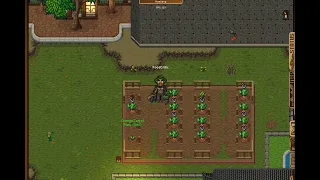 Harvesting the farmArchive · Watch on YouTube (opens a new tab)
These reels show earlier builds. Maps, interfaces, and mechanics have changed.
02 / Your Path
Four ways to face the world.
Your combat class is called a Path. Pick the method that feels like you.
Warrior
Strength. Resolve.
Close combat.
Rogue
Timing. Movement.
Precision.
Mystic
Focused magic.
Power, carefully placed.
Sage
Healing. Endurance.
A well-timed recovery.
03 / The world
Useful things. Useful people.
Welcome to Qi’an, the region you’ll explore. Seasong is your first city.
Work connects us
Your hunt is somebody’s next meal.
A hunter brings home a carcass. A harvester breaks it down. A cook turns the cuts into food.
Good company has an appetite.
See how the trades connectThe town keeps time
Even the baker clocks off.
Shops have hours. People keep shifts. Learn who’s around, and when. A local day takes three real hours.
Getting to know a place pays.
Get to know Qi’an05 / Start playing
Your first step is a download.
Early Access is open. Come get your bearings.
Install. Patch. Make yourself at home.
Choose your desktop installer. Open the client and let it patch, then log in or create an account. Make a character and begin.
Returning from a playtest?Start with a fresh installation. The download page has the steps.
Can I play for free?
Yes. Free players can hunt, gather, use public crafting, trade, and progress.
What does optional patronage add?
Homesteads, storage, and conveniences for players who want a place to tend. Public crafting uses the same recipes and outputs. Read about patronage.
What can I play on?
Windows, macOS, and Linux. Samhan uses an installed desktop client. Choose the right installer on the download page.
Do I need an invitation?
No key or invitation is needed. Create an account online or inside the client, then begin.
What does Early Access mean?
The game is open while development continues. Expect changes and rough edges. Known issues and development updates help you keep up.
Where do I go if I’m stuck?
Use Help inside the game, visit Player Help, or bring account trouble to a private ticket through My Account. A good question is a perfectly respectable beginning.
Take what helps. Leave room for a surprise.